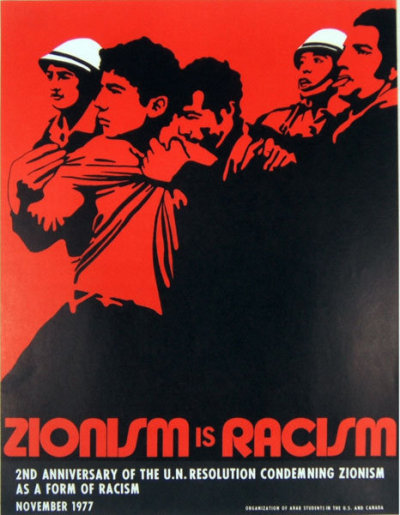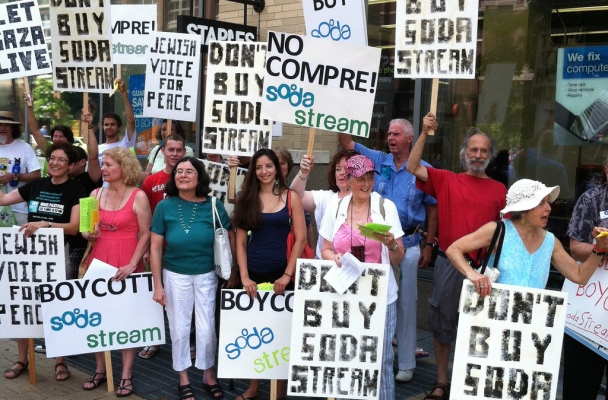
Who’s behind this US boycott?
The Interfaith Boycott Coalition is a group of individuals from faith-based organizations and institutions who share a common goal of bringing justice to the Palestinians…

 The New York Post tabloid is notorious for its virulent anti-Palestinian editorializing.




 Palestinian surrounding Israeli settlers near


Witnesses told Ma’an that 59-year-old Adel Muhammad Yakoub from the northern West Bank village of Balaa died as a result of extreme overcrowding inside the Ephraim/Taybeh checkpoint.
They highlighted that some 10,000 Palestinian workers cross through the checkpoint every day and that inspection procedures at the checkpoint go very slowly causing dangerous levels of overcrowding inside the checkpoint.
The victim left behind a wife and seven children, aged 11-16. He is reported to have suffered from heart disease.

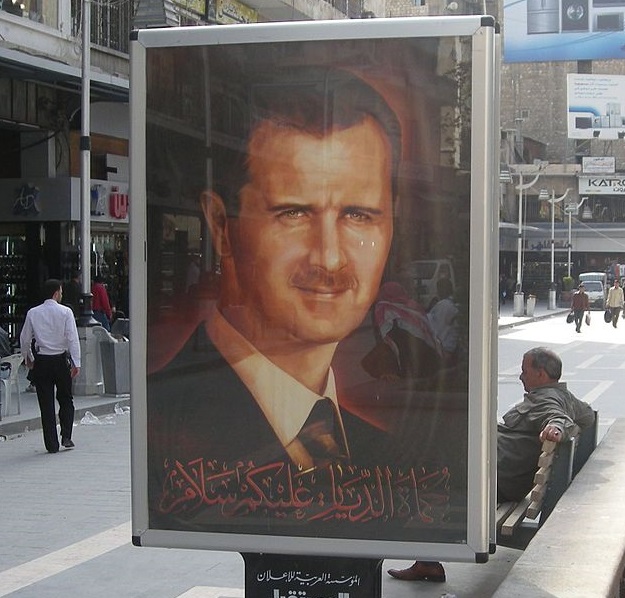
In exchange for destroying the poison gas and the factories that make it – a process that’s almost impossible to verify — there would be no U.S. military strike. Assad would get to stay in power and continue his war with “conventional weapons,” including artillery and Scud missile attacks on civilian areas, napalm dropped on schools, and starving the opposition into submission. Even more shocking is that Assad has weathered the crisis appearing to the world as reasonable, rational and ready to compromise.I’m not entirely convinced that I buy the other coup, though. See what you think of the explanation by Annia Ciezadlo in the New Republic and respond in the comments section to this post. Miss Ciezadlo writes of Assad (emphasis added):


 The AQI incursion began in Ramadi, where Prime Minister Maliki ordered a violent crackdown on protesters Monday, and quickly spread, along with the protests, into neighboring Fallujah.


And the Israeli prime minister, Benjamin Netanyahu, included in a message to Secretary of State John Kerry a YouTube video [above] of Mr. Assaf singing longingly about cities in Israel that were once Palestinian. Mr. Netanyahu wrote, “Incitement and peace cannot coexist.”And:
Mr. Assaf grew up in the Khan Younis refugee camp in Gaza, an area that often has shortages of water, gas and electricity because of restrictions imposed by Israel.The Times has now changed the article and appended this long correction.
An earlier version of this article referred incorrectly to cities in Israel Mr. Assaf sings about. While they had largely Arab populations before Israel became a state in 1948, they were not “Palestinian” in the sense of being part of a Palestinian political entity. The article also referred incorrectly to shortages of water, gas and electricity in Gaza. While Israel places restrictions on some goods coming into Gaza, and many Palestinians blame Israel for shortages, they were worsened by Egypt’s closure of smuggling tunnels and by a tax dispute between the militant Hamas faction, which governs Gaza, and the Palestinian Authority.Read more